



Price: $189.00
(as of Jul 26, 2026 21:35:45 UTC – Details)

KODAK PIXPRO WPZ2 Review: A Deep Dive into the Rugged Compact for the Aquatic Adventurer
In an era where smartphones have largely supplanted dedicated point-and-shoot cameras for casual photography, the rugged compact category remains a vital niche. These devices exist for a singular reason: they go where phones fear to tread—underwater, into the dust, and onto the concrete. The KODAK PIXPRO WPZ2 positions itself squarely in this arena, promising a blend of durability, optical versatility, and modern connectivity wrapped in a pocketable form factor. Based on the manufacturer’s specifications and design philosophy, this review examines whether the WPZ2 delivers a compelling argument for keeping a dedicated adventure camera in your gear bag.
Design Philosophy: Built for the Elements, Not the Studio
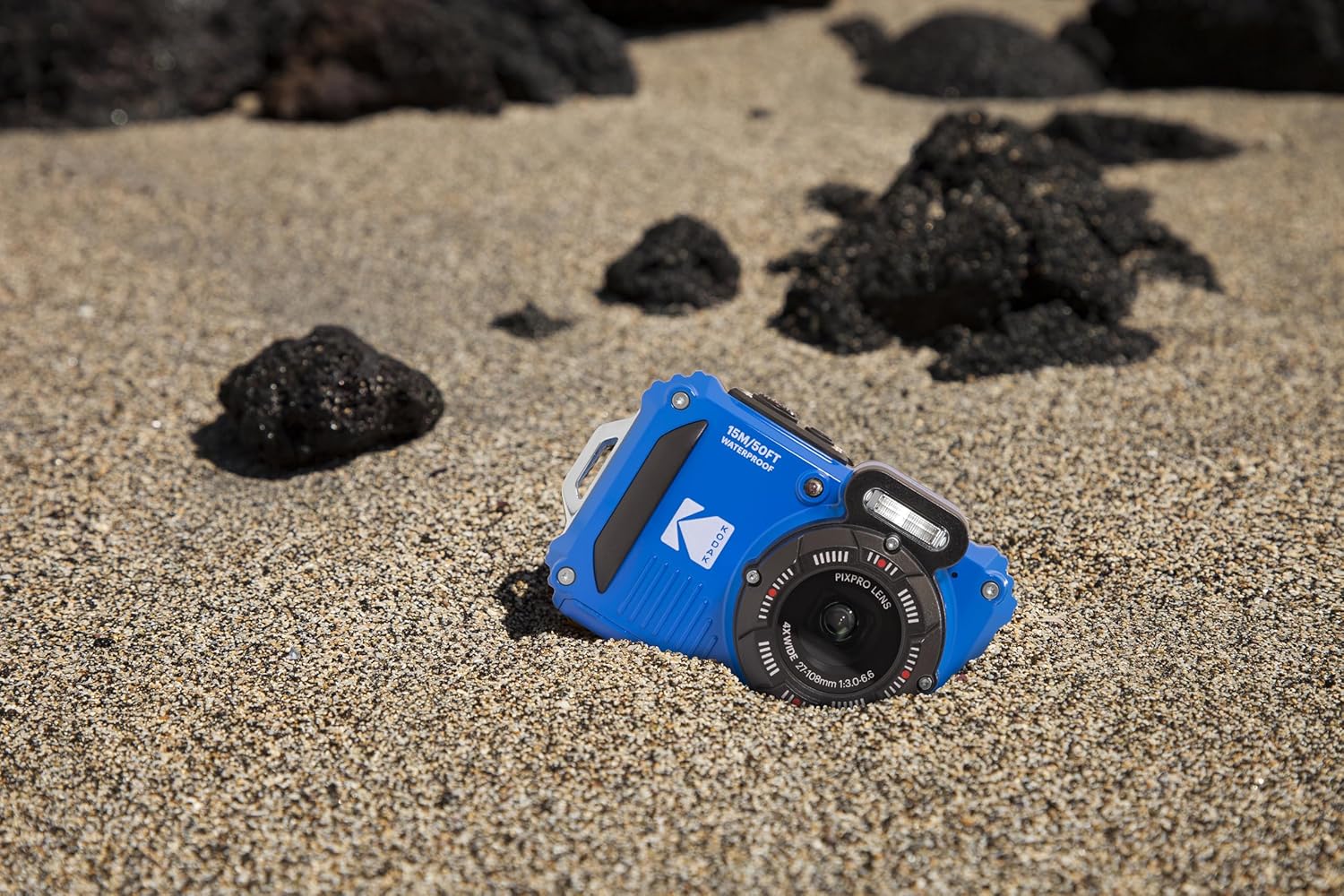
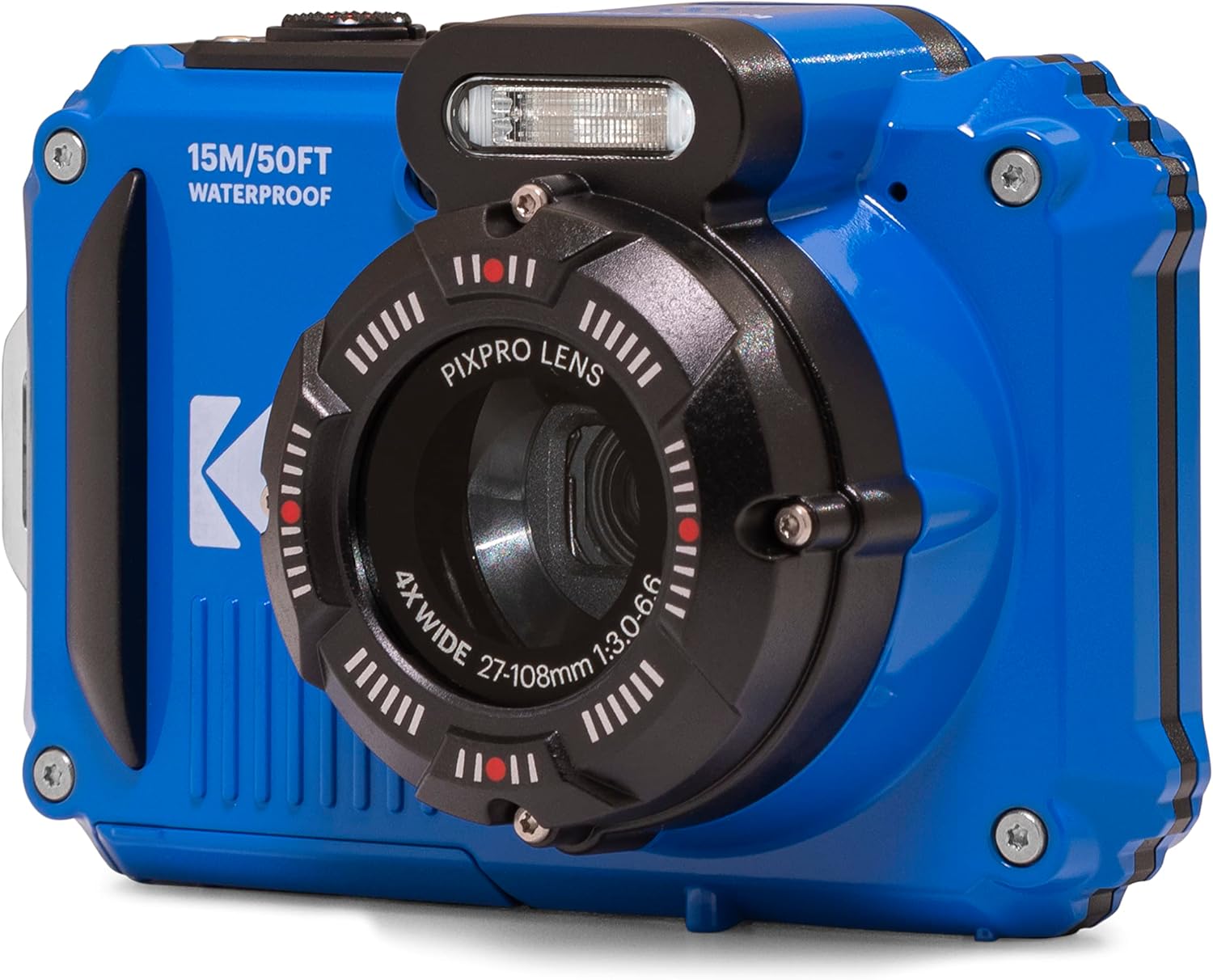
The core identity of the WPZ2 is defined by its ingress protection ratings. The specification sheet leads with a headline feature: waterproofing to 15 meters (approximately 50 feet). This is not merely “splash resistance” or “weather sealing”; this is a genuine submersible rating that opens the door to serious snorkeling, shallow reef diving, and pool photography without the need for a bulky, expensive underwater housing.
Complementing the waterproofing is a shockproof rating of 2 meters (roughly 6.5 feet). This addresses the inevitable butterfingers moment on a rocking boat, a slippery pool deck, or a rocky trail. The dustproof construction rounds out the “IP” trifecta, sealing the internals against fine particulates—critical for beach environments where sand destroys lens mechanisms, or desert hiking where dust cakes sensors.
Physically, the camera adopts the classic rugged aesthetic: a chunky, sealed chassis with oversized controls designed for operation with wet fingers or gloved hands. The blue colorway aids visibility against sand or seabed. Crucially, the form factor is described as compact enough for a wetsuit pocket. This portability is a significant usability factor; a rugged camera that stays in the dry bag because it’s too heavy fails its primary mission. The WPZ2 aims to be the camera that is always there, clipped to a buoyancy compensator or tucked into a board short pocket.
Optical Performance: The BSI Sensor and Zoom Advantage
The imaging pipeline centers on a 16-megapixel Backside-Illuminated (BSI) CMOS sensor. In the context of a 1/2.3-inch sensor class (standard for this category), the BSI architecture is the critical differentiator. By moving the wiring layer behind the photodiodes, BSI designs gather significantly more light than traditional front-side illuminated sensors. For a camera marketed explicitly for underwater and “challenging outdoor conditions,” this is the single most important specification for image quality.
Water absorbs light rapidly—reds vanish within the first few meters, and overall luminance drops exponentially with depth. A sensor that maximizes photon capture allows for lower ISO settings, reducing noise and preserving the dynamic range needed to capture the vibrant colors of coral or the silhouette of a manta ray against the surface. Above water, this translates to better twilight performance on the ski slopes or around the campfire.
Paired with the sensor is a 4x optical zoom lens covering a 27mm wide-angle equivalent (35mm format) at the wide end. The 27mm focal length is a deliberate, smart choice for adventure photography. It is wide enough for environmental storytelling—capturing the expanse of a reef, the scale of a mountain ridge, or a group selfie on a kayak—without the distortion of an ultra-wide action cam lens. The optical zoom (versus digital zoom) maintains the full 16MP resolution throughout the range, allowing the shooter to frame a distant sea turtle or a skier on a ridge without cropping penalty.
Video Capabilities: 1080p Pragmatism
The WPZ2 records Full HD 1080p video. In a market saturated with 4K and 5.3K action cameras, this specification might appear conservative on paper. However, for the target user—snorkelers, kayakers, families on vacation—1080p remains the pragmatic sweet spot.
First, file management: 1080p files are significantly smaller, writing faster to microSD cards and transferring quicker via Wi-Fi to a smartphone. This extends recording time per battery charge and per gigabyte of storage. Second, playback compatibility: 1080p plays natively on virtually every device, television, and social platform without transcoding hiccups. Third, stabilization: optical and electronic stabilization systems generally perform more effectively at 1080p/30fps or 60fps than at higher resolutions on smaller sensors, yielding smoother footage of a bobbing kayak or a hand-held ski run. The camera captures “underwater sequences and outdoor adventures in smooth, clear detail,” prioritizing usable footage over spec-sheet bragging rights.
Connectivity: The Modern Workflow
The inclusion of built-in Wi-Fi transforms the WPZ2 from a “shoot now, view later” device into a connected tool. The implementation focuses on two distinct workflows:
- Instant Transfer: The ability to offload select JPEGs to a smartphone immediately after surfacing solves the “vacation photo bottleneck.” Users can post to social media, message family, or back up the day’s hero shots to the cloud before the salt water dries on the housing.
- Remote Viewfinder/Control: This is a vastly underrated feature for a rugged camera. Mounting the WPZ2 on a pole, a surfboard nose, or a chest harness renders the rear LCD invisible. Using a smartphone as a remote monitor allows for precise framing of “over-under” split shots (half above water, half below) or group photos where the photographer wants to be in the frame. It effectively turns the phone into a wireless tether, adding significant creative flexibility.
Ergonomics and Power: All-Day Endurance
The 2.7-inch LCD serves as the primary composition and review tool. While touchscreens are common on tough cameras, they are often unusable underwater or with wet fingers. A traditional button-driven interface driving a 2.7-inch display is the correct ergonomic choice here—reliable, glove-friendly, and readable in bright sunlight (assuming adequate anti-reflective coating).
Power comes from a rechargeable lithium-ion battery rated for “all-day use.” This is a welcome departure from AA-powered rugged cameras of the past. Lithium-ion offers superior energy density (lighter weight for the capacity) and better cold-weather performance—essential for the skiing and snowboarding use cases highlighted in the product description. The convenience of USB charging (implied by modern Li-ion standards) means a power bank can top up the camera during a surface interval on a dive boat or a lunch break on the slopes.
Storage utilizes microSD/microSDHC cards. The micro form factor is ideal for a waterproof camera; the cards are tiny, inherently water-resistant (solid state, no moving parts), and easy to swap with cold, wet hands. A high-endurance card is recommended for video longevity.
Use Case Scenarios: Where the WPZ2 Lives
The product description explicitly targets a diverse tribe: swimmers, surfers, skiers, hikers, and outdoor adventurers. Analyzing the feature set against these personas reveals the camera’s strengths:
- The Snorkeler/Reef Explorer: The 15m depth rating covers 95% of recreational snorkeling. The 27mm wide angle captures the reefscape; the 4x zoom brings the shy parrotfish closer. The BSI sensor handles the blue-water light loss. Wi-Fi gets the “turtle selfie” on Instagram before the boat reaches the dock.
- The Kayaker/Whitewater Paddler: Shockproofing handles the inevitable capsize or paddle impact. Dust/sand proofing survives the beach launch. The form factor fits in a PFD (life jacket) pocket. 1080p video captures the rapid run without filling the card in an hour.
- The Skier/Snowboarder: Cold-weather battery performance (Li-ion) and glove-friendly buttons are paramount here. The 2m drop rating survives the yard sale. The wide angle captures the tree run POV.
- The Desert Hiker/Trail Runner: Dustproofing is the hero feature. The lightweight body disappears in a hydration pack. The optical zoom compresses distant mountain layers for landscape shots a phone’s fixed wide lens struggles with.
The “No Housing” Value Proposition
A critical economic argument underpins the WPZ2: Total Cost of Ownership. A competent underwater housing for a mirrorless or compact camera often costs 3x–5x the price of the WPZ2 itself, adds significant bulk, and requires meticulous O-ring maintenance. The WPZ2 eliminates this friction entirely. It is a “grab and go” solution. There are no latches to grease, no vacuum pumps to check, and no fogging inserts to replace. For the user who wants photos of the adventure rather than an adventure in photography gear management, this integrated ruggedness is the primary selling point.
Limitations to Consider (Based on Specs)
An honest assessment based solely on the provided specifications must acknowledge the category constraints.
- Sensor Size: The 1/2.3-inch sensor, even with BSI tech, has physical limits regarding dynamic range and high-ISO noise compared to 1-inch or APS-C sensors. This is a camera for good light (underwater with sun, bright snow, sunny trails). Night diving or dark cave exploration requires external lights.
- Zoom Range: 4x optical (approx 27-108mm equivalent) is versatile but not a “superzoom.” It won’t reach a whale shark 20 meters away.
- Raw Capture: The description specifies “16MP photos” and 1080p video, implying JPEG/MP4 output. There is no mention of RAW file support, meaning the camera’s image processor bakes in white balance, sharpening, and noise reduction. For the target audience (social sharing, quick edits), this streamlined workflow is likely a feature, not a bug.
- Lack of GPS: Location tagging relies on the connected smartphone via Wi-Fi, not an internal module.
Verdict: The Specialist’s Specialist
The KODAK PIXPRO WPZ2 does not attempt to be a premium compact for street photography, nor does it chase the action-cam spec war of resolutions and frame rates. It occupies a specific, valuable middle ground: a dedicated, optical-zoom camera that is natively waterproof to recreational diving depths, shockproof for impact sports, and connected for the modern sharing workflow.
Its strengths are holistic rather than spec-sheet dominant. The combination of the 27mm wide start, 4x optical zoom, BSI low-light capability, and true 15m waterproofing in a wetsuit-pocket form factor creates a tool that solves the “I wish I had a camera for this” problem for a wide swath of outdoor enthusiasts.
For the snorkeler tired of fogging phone cases, the skier tired of fumbling a touchscreen with liners, or the parent wanting a durable camera for the kids’ pool party that also takes a decent landscape shot on the hike back—the WPZ2 presents a coherent, purpose-built argument. It respects the environment it operates in, prioritizing reliability and optical utility over marketing numbers. In the rugged compact segment, that focus on usable engineering over flashy specs is exactly what keeps a camera in the pocket, ready for the shot that makes the adventure worth remembering.