




Price: $1,749.24
(as of Jul 28, 2026 21:42:07 UTC – Details)

Nikon D500 DX-Format Digital SLR (Body Only): A Comprehensive Deep Dive into Nikon’s DX Flagship
Introduction
The Nikon D500 occupies a prominent position in Nikon’s DSLR lineup as the DX-format flagship, bridging the gap between the company’s consumer-level and professional full-frame offerings. Positioned as a compact powerhouse, the D500 is designed to serve a wide range of photographic applications, from landscape and wildlife photography to fast-paced sports action and cinematic videography. With its 20.9 megapixel DX-format CMOS sensor, advanced autofocus system, and impressive high-speed shooting capabilities, the D500 aims to deliver the type of performance that has become synonymous with the Nikon brand. This review will explore the various aspects of this camera body in detail, examining what it brings to the table and how it performs across different use cases.
Design and Build Quality
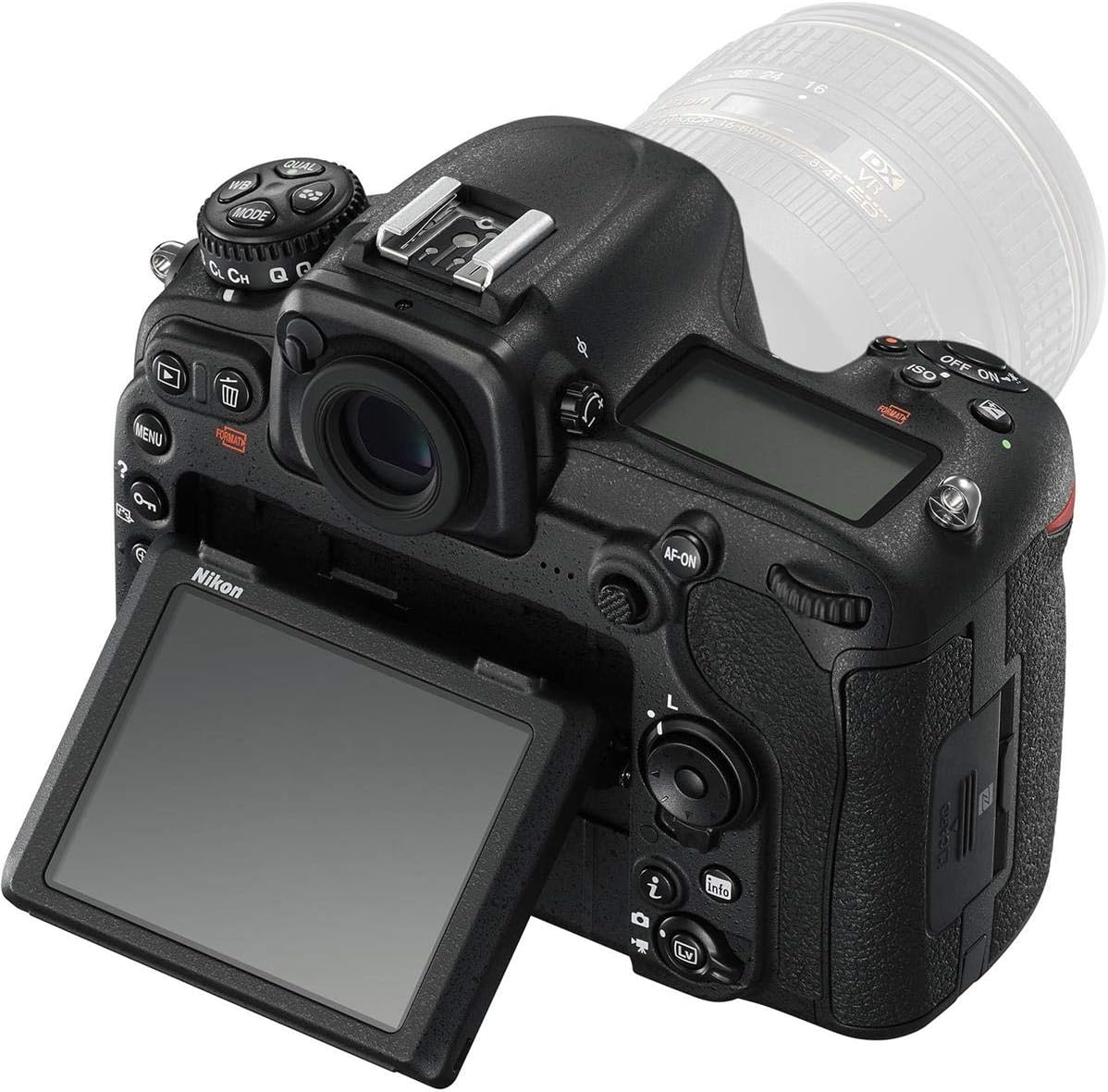
One of the most immediately noticeable aspects of the Nikon D500 is its compact form factor. Compared to its larger sibling, the D5, the D500 achieves a notably smaller and lighter body while retaining much of the same rugged construction. The camera is built with a combination of magnesium alloy and carbon fiber materials, making it both durable and portable. This balance of strength and lightness is one of the defining design philosophies of the D500—the camera is purpose-built for photographers who need rugged reliability without the bulk that often comes with professional-grade equipment.
In terms of weather resistance, the D500 features dust and water-drop resistance at the body level, providing peace of mind when shooting in challenging outdoor conditions. Whether hiking through the lush landscapes of New Zealand, trekking through rainy environments, or shooting on safari in Africa, the camera’s sealed construction offers a degree of protection against the elements. The ergonomics follow Nikon’s well-established DSLR design language, providing a comfortable grip and intuitive button layout that seasoned DSLR users will find familiar. These design choices reflect Nikon’s commitment to producing cameras that can serve as reliable travel companions over extended periods of use.
Image Sensor and Performance
At the heart of the Nikon D500 is a 20.9 megapixel DX-format CMOS sensor. This sensor represents a significant step forward in DX-format image quality, delivering what Nikon describes as a balance between portability and image resolution. The pixel count strikes a sweet spot for many photographers—high enough to produce detailed images suitable for large prints and extensive cropping, yet not so high as to create unwieldy file sizes or impose unreasonable demands on storage media.
The D500 pairs this sensor with Expeed 5, Nikon’s latest image processing engine. This processor is responsible for handling the enormous amount of data generated by the sensor, and it does so at speeds that enable continuous shooting at up to 10 frames per second. During bursts, the camera can capture up to 200 frames before the buffer fills, making it remarkably capable for tracking fast-moving subjects such as wildlife in motion, sporting events, or fast street photography. The sustained frame rate during bursts remains one of the standout technical features of this camera, particularly at this price point and in this sensor format.
The D500 also achieves excellent image quality in terms of color reproduction, detail rendition, and tonal range. Nikon has long been recognized for its ability to extract rich color and subtle tonal gradations, and the D500 continues this tradition. The combination of the CMOS sensor and Expeed 5 processor produces images with nuanced tonality, accurate color reproduction, and the kind of texture detail that makes subjects feel tangible and lifelike.
Autofocus System
The autofocus system of the Nikon D500 is nothing short of exceptional for a DX-format camera. It utilizes the Multi-CAM 20K autofocus module, which incorporates 153 individual AF points spread across the viewfinder frame. Of these points, 99 are cross-type autofocus sensors, providing enhanced accuracy and reliability when tracking subjects that move along both horizontal and vertical axes. The remaining points cover additional areas of the frame, ensuring comprehensive subject coverage regardless of composition.
The D500 also introduces group-area autofocus, which allows the photographer to group multiple AF points together and have the camera prioritize the subject within that group. This can be particularly useful when the subject is moving unpredictably or when the background contains distractors that might confuse a single-point AF system. Additionally, the camera incorporates an 180k pixel RGB sensor that aids in subject detection and metering, contributing to faster and more accurate autofocus acquisition.
The overall result is an autofocus system that is swift, accurate, and capable of maintaining lock on subjects even in challenging shooting conditions. The 153-point coverage area provides flexibility in composition, reducing the need to recompose shots solely for the sake of achieving focus.
Video Capabilities
The Nikon D500 extends its versatility beyond still photography into the realm of video with the ability to record 4K UHD video at 30 frames per second. This capability positions the D500 as a compelling option for photographers who also want to shoot high-resolution cinematic footage without needing to invest in a separate video camera. The 4K format provides a significant level of detail and allows for substantial cropping in post-production, effectively offering additional compositional flexibility.
The video recording capabilities of the D500 complement its still photography strengths. The camera’s fast autofocus system works during video recording as well, helping to maintain sharp focus on moving subjects. The tilting touchscreen LCD monitor also proves useful during video work, allowing the photographer to adjust framing and confirm focus from angles that would be difficult to check through the viewfinder alone. These video features make the D500 a versatile tool for content creators and visual storytellers.
Low-Light Performance
Low-light performance is an area where the Nikon D500 demonstrates considerable capability. The camera features a native ISO range of 100 to 51,200, with expandable settings that reach Lo 1 (equivalent to ISO 50) and Hi 5 (equivalent to ISO 1,640,000). This wide sensitivity range provides photographers with the flexibility to work in environments with very little available light—from dimly lit city streets and nighttime events to the challenging lighting conditions found in dense forests or twilight wildlife scenarios.
The camera’s metering system operates down to -4 EV, which represents extremely low ambient light levels. At these sensitivity levels, the Expeed 5 processor works to manage noise and preserve detail, producing images that retain usable quality even at elevated ISO settings. While the D500 cannot overcome the fundamental limitations of a DX-format sensor compared to full-frame alternatives, its high-ISO performance is competitive within its format category and represents an effective tool for night photography, astrophotography, and indoor event coverage.
Connectivity and Wireless Sharing
The Nikon D500 incorporates a comprehensive suite of wireless connectivity options designed to streamline the workflow from capture to sharing. Built-in Wi-Fi enables wireless image transfer to compatible smart devices and computers, while Bluetooth Low Energy (BLE) technology powers the SnapBridge functionality. Through SnapBridge, images can be automatically transferred to a paired smartphone or tablet, allowing for quick sharing on social media platforms and easy backup to cloud storage services.
The camera also features Near Field Communication (NFC) capability, which simplifies the process of establishing connections with compatible devices with a simple tap. For users who require faster wired transfer options, the D500 is compatible with the optional WT-7A transmitter, which can send files to an FTP server or computer at speeds of up to 866.7 Mbps. This combination of wireless and wired connectivity options ensures that photographers can choose the most efficient workflow for their particular needs, whether sharing images in the field or transmitting large batches of files back at the office.
LCD Display and User Interface
The D500 features a 3.2-inch tilting LCD monitor with approximately 2,359k dots resolution and an RGBW color array. The tilting mechanism allows the screen to rotate and angle, making it possible to shoot from high or low perspectives while still being able to review the image on the monitor. The touchscreen functionality adds an intuitive layer of interaction, allowing users to tap to select focus points, navigate menus, and adjust settings with a responsive and direct interface.
The high resolution of the monitor ensures that reviewing images on the LCD provides an accurate representation of the captured photograph, making it easier to assess sharpness, exposure, and color accuracy on location. The combination of the large screen size, high resolution, tilting mechanism, and touchscreen input creates a user interface that is both versatile and user-friendly.
Memory and Storage
The D500 is equipped with dual memory card slots, offering flexibility in how photographers manage their media. The camera was introduced at a time when Nikon was adopting XQD card technology for its professional and semi-professional offerings, and the D500 was the first DX-format camera in the Nikon lineup to feature XQD card compatibility. This provides faster read and write speeds, which is critical when capturing high-resolution still images at the maximum burst rate or recording 4K video files.
However, recognizing that XQD cards represent a newer and more expensive format, Nikon retained compatibility with standard SD cards as well. The dual slot design means that photographers can mix and match media types according to their workflow preferences—using the faster XQD card for heavy shooting sessions while relying on SD cards as a secondary or backup option. This flexibility helps manage costs while still providing the performance benefits of modern flash memory technology.
Conclusion
The Nikon D500 represents a compelling proposition within the DX-format DSLR market. It combines a refined 20.9 megapixel sensor, a rapid Expeed 5 processor, an extensive 153-point autofocus system, and a burst rate of 10 frames per second with a compact, rugged, and travel-friendly body. Its video capabilities extend its usefulness beyond still photography, while its comprehensive wireless connectivity suite ensures seamless integration into modern digital workflows. The D500 demonstrates Nikon’s ability to produce a camera that is both small in stature and large in capability, making it a formidable tool for enthusiasts, advanced hobbyists, and professionals alike who require a versatile and portable imaging system.